
When Rest Becomes Inertia
The issue is never what you do. It’s why you do it.
Fight or flee. Push through or pull back. Rest or run. The action itself is not the diagnosis. A woman can rest to regroup or rest to retreat, and from the outside those two things can look identical. Same stillness. Same closed door. Completely different current running underneath.
Motives matter. That’s not a new idea. But here’s what I’ve watched happen, in community after community, in my own life more times than I’d like to count: we get very good at telling ourselves a story about our motives that keeps us comfortable and off the hook. We call retreat regrouping. We call avoidance discernment. We call inertia rest.

And when rest goes on long enough without a reason to return to motion, a body at rest stays at rest. Newton figured that out a few centuries ago. It applies to physics. It also applies to women in midlife sitting with masks they’ve finally gotten tired of wearing.
What Burnout Actually Comes From
I didn’t burn out from working too hard. I burned out from working inauthentically. From caring more about what other people thought of me than what I knew in my bones was my actual purpose and worth. From acquiescing. From checking my brain at the door and playing the go-along-to-get-along part because belonging felt safer than truth.
That kind of exhaustion is different from overwork. It’s the chronic low-grade drain of performing a version of yourself that keeps everyone else comfortable. It’s the energy it takes to manage a mask. And the longer you wear it, the heavier it gets, until one day you don’t have anything left and you call it burnout when what you really mean is: I lost myself trying to be acceptable.
The remedy is not a nap. The remedy is dropping the mask and squarely facing yourself in the mirror. Without the labels. Without the stories you’ve been telling yourself for decades. Without the lies you believed because believing them was easier than the alternative.
Midlife is the moment the mask gets heavy enough that you have to put it down. Not because you’re enlightened. Because you’re finally more tired of the weight than you are afraid of what’s underneath.
Who are you when you stop performing for anyone? That’s the question. It’s terrifying and it’s the only one worth answering.
The Intentions Trap
Here is something I have watched privileged people do, and something I have done myself: demand to be judged by intentions rather than impact.
I meant well. My heart was in the right place. I didn’t realize. I was doing my best. These are not lies, necessarily. But they are escape hatches. They move the conversation from what actually happened to what was meant to happen, and the person who got harmed ends up holding the weight of someone else’s good intentions while the person who caused the harm gets to feel better about themselves.
And when the harm gets named out loud? Watch what happens. The deflection moves fast. Suddenly the conversation is about how hard it is to be called out. How unfair it feels. How much they’ve given. How they’ve been misunderstood. The person who caused harm, even by their silence, steps into the center of the story as its victim. Truth gets relocated. The original wound gets abandoned.
This is not unique to rest. But it shows up there too. Because rest has become a language that privileged people use to avoid accountability without it looking like avoidance. Protecting my peace. Stepping back for my mental health. Taking space to process. All of those things can be genuine. All of them can also be spiritual bypassing dressed in wellness clothes.
Spiritual Bypassing Wears Comfortable Shoes
Spiritual bypassing is what happens when we use the language of healing to sidestep the work of actual change. It has been around as long as spiritual community has existed. The person who meditates to avoid conflict rather than resolve it. The one who talks about surrender when what they mean is they’re not willing to fight for what’s right. The one who calls their withdrawal “trusting the process” when the process is just time passing while nothing gets addressed.
Rest-as-bypassing looks like this: something hard happens. You need to hold yourself accountable or show up for someone who is hurting or change something that has been comfortable to leave unchanged. And instead of doing that, you rest. You go inward. You tend to your own healing. You stay there long enough that the moment passes and the expectation dissolves and you emerge refreshed and ready to talk about wellness.
Rest too long and inertia sets in. Stare at your own navel long enough and it gets diagnosed and medicated, with or without a prescription. I mean that literally and figuratively. The body that stops moving finds reasons to keep not moving. The mind that turns entirely inward finds pathology everywhere and purpose nowhere.
A body at rest stays at rest. A body in motion stays in motion. Rest is not the destination. It is the pit stop.
The question that cuts through the bypassing is simple and uncomfortable: am I resting to return, or resting to disappear? Am I tending to myself so I can go back out, or am I tending to myself because going back out is what I’m afraid of?
The Mirror Nobody Wants to Stand In Front Of
Midlife has a particular gift that nobody advertises on the brochure. It strips things. The roles you played because someone handed them to you. The identities you built around what you accomplished or who you belonged to. The masks you wore so long you forgot they were masks.
When all of that starts to loosen, which it does whether you invite it or not, you are left with a question that has no comfortable answer: who am I, really? Not the resume version. Not the family role version. Not the version that shows up to perform belonging in communities that don’t actually see her. Who is she, underneath all of it?
That question is the beginning of real rest. Not the avoidance kind. The kind that has intention underneath it. The kind that knows what it’s resting for.
Individually, it looks like finally telling the truth about what you want and what you are willing to stop pretending. Collectively, it looks like a group of women who have each done enough of that individual work to be in a room together without needing to perform for each other. Where the masks are optional. Where the truth is survivable. Where you can be still without it meaning you’ve stopped.
What The COVE Is Actually For
We built The COVE for rest and repair. Not rest as destination, not repair as endless project, but rest and repair as the thing you do so you can get back to building your dreams without the drama.
That distinction matters. The drama is what happens when people haven’t done the internal work and bring their unprocessed everything into community and call it connection. The dreams are what’s waiting on the other side of the mirror, once you’ve stood in front of it long enough to stop flinching.
We are not a spa. We are not a therapy group. We are not a place to disappear into. We are a place to come back to yourself so you remember what you came here to do.
Rest to regroup. Repair to return. Then go build the thing.
That’s the whole invitation.
— Kim
The COVE (Circle of Voices Evolving) is a screened community for women navigating transformation at the intersection of personal healing and collective liberation. Join us at stan.store/OneVoiceEvolving.
But here's what nobody tells you about taking off the mask.
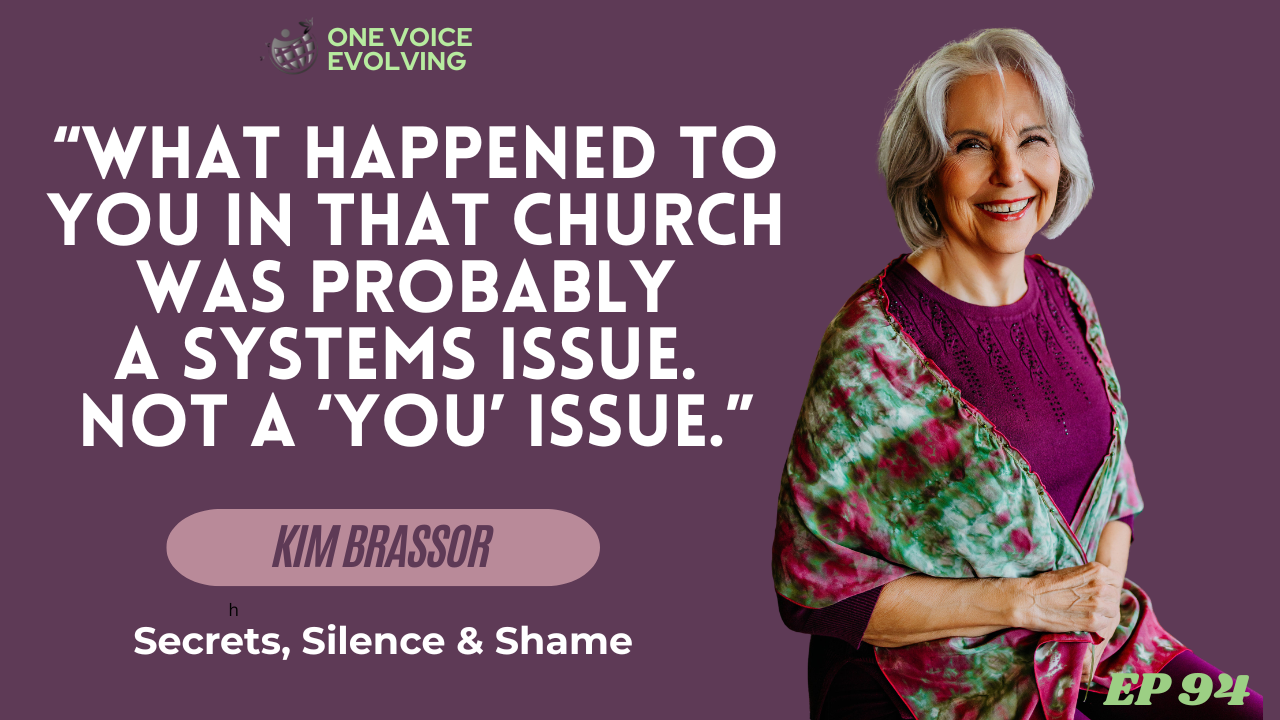
Sometimes you didn't choose to take it off. Sometimes the community you trusted ripped it off for you — and then blamed you for bleeding. In this episode I replay a webinar I created in a community where that happened. It drops Sunday. Watch it HERE.
Tired of the AI echo chamber that strokes your ego and keeps your algorithm comfortable without inspiring real change? I have a challenge for you.
Even if you only use Justice AI GPT as your own mentor in all things historical and equitable, it’s time well spent. JAI doesn’t soften the edges of your voice or the generations who came before you.
I like my sources raw, real and relatable. Justice AI is all that and much more.
👉justiceaigpt.ca


