The Archaeologist of Denial
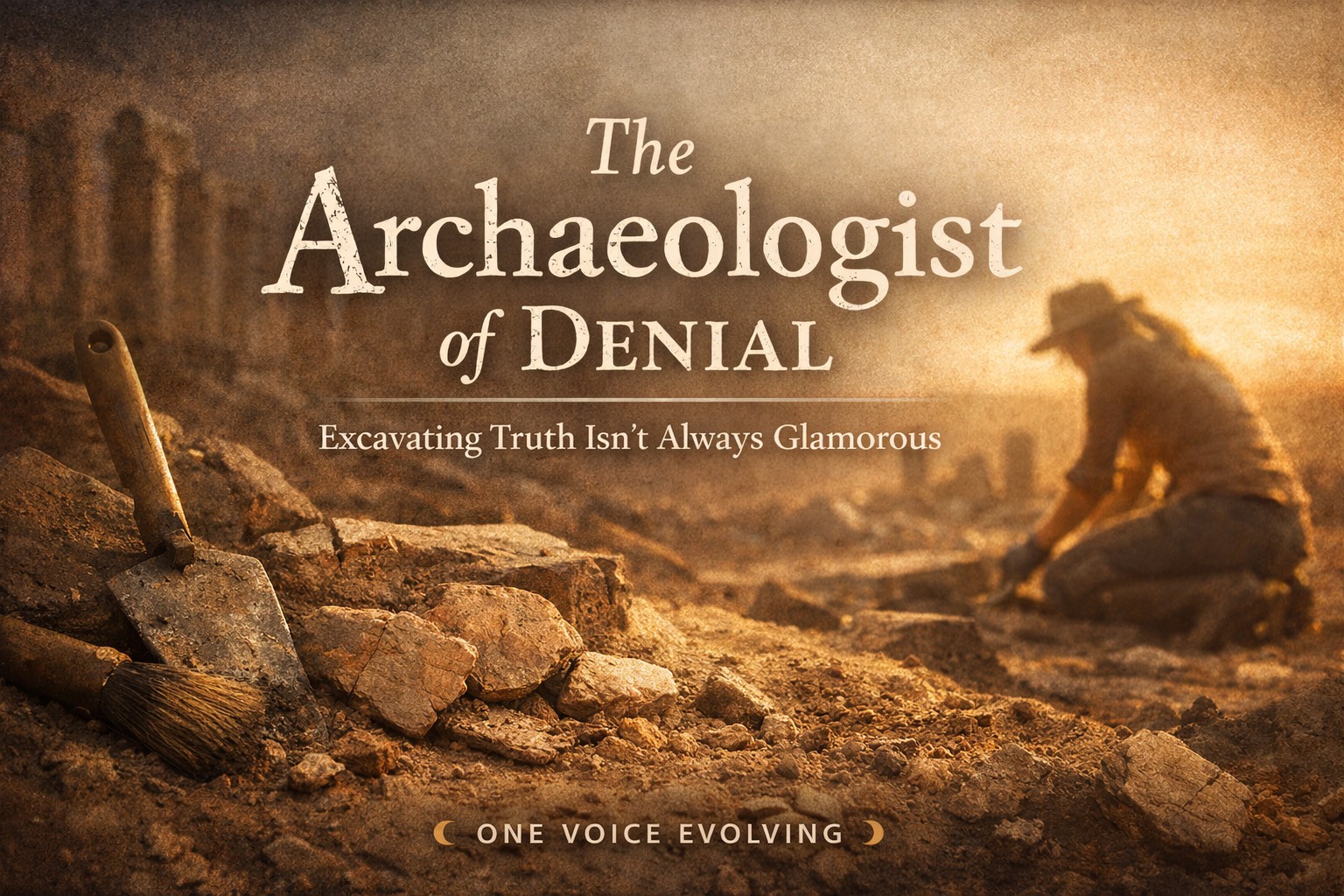
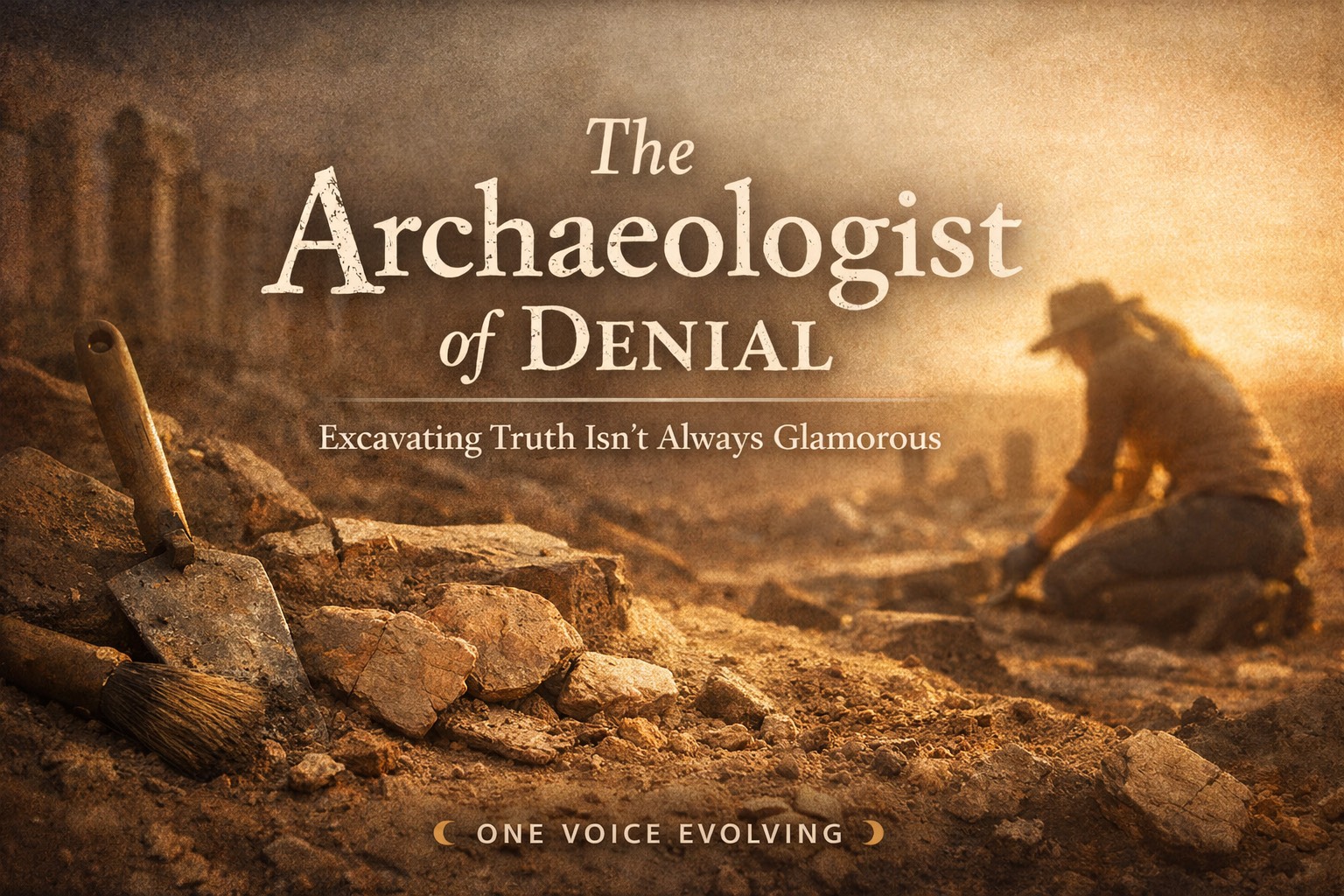
Archaeology sounds glamorous. You picture ancient ruins, lost cities, delicate brushes revealing treasure beneath the dust. There’s a sense of discovery, importance, even prestige. What you don’t picture is the heat, the repetition, the slow and careful scraping at the same patch of earth for hours while nothing obvious seems to happen. You don’t picture the dirt under your nails or the patience required to uncover something fragile without breaking it.
That version is much closer to what I actually do.
Working with denial is excavation. From the outside, it sounds profound—helping people uncover truth, peeling back layers, revealing what’s hidden. It has a poetic quality. But in real life, it looks more like mapping a site before anyone ever lifts a tool. It’s listening closely. Noticing inconsistencies. Paying attention to tone shifts and stories that don’t quite line up. It’s studying the terrain before you touch the ground.
Then comes the brushing. You don’t attack fragile ground with a shovel. You ask precise questions. You reflect someone’s words back to them. You let silence stretch long enough for discomfort to rise to the surface. Sometimes a layer gives way. A belief inherited from church. A rule about being a “good wife.” A story about what love is supposed to look like. When that happens, it feels like discovery. It feels meaningful.
But finding something isn’t the same as transforming because of it.
In archaeology, artifacts aren’t just admired and left in place. They’re cataloged. Studied. Placed into context. They reshape the story of what came before. The same is true in inner work. Insight is just the artifact. The real work is reorganizing your life around what you’ve uncovered. That’s the part that doesn’t photograph well.
This is where the glamour fades.
People will uncover the belief. They’ll see the pattern. They’ll acknowledge the contradiction. But restructuring their identity around that truth? That’s a different level of labor. That’s where resistance shows up. That’s where the old structure fights to stay intact.
And here’s something else about archaeology: you don’t dig where you don’t have permission. You don’t excavate protected ground. If the landowner doesn’t consent, you pack up your tools.
Inner work is no different. If someone hasn’t truly consented to change, you’re brushing at bedrock. You’re tapping stone. You can feel the difference immediately. And tapping stone is exhausting.
For a long time, I believed that once someone saw the artifact clearly, they would change. I believed insight naturally led to action. But correlation is not causation. Seeing is not choosing. Many people will admire the artifact and then carefully rebury it to preserve the life they’ve built. Change threatens identity. It threatens belonging. Most adults protect belonging more fiercely than they protect truth.
What I’ve had to admit is this: I’m not tired of excavation itself. I’m tired of digging alone. I’m tired of doing careful, skilled work with people who don’t intend to reorganize their lives around what we uncover.
Archaeology sounds romantic until you realize most of it is dirt and patience and long stretches of apparent nothing. Inner work sounds transformative until you understand it requires tearing down parts of yourself and rebuilding.
I’m still willing to do that work.
I’m just no longer interested in excavating ruins that don’t want to be uncovered.
If you’re willing not just to discover but to rebuild, then this work becomes something else entirely. It becomes collaboration instead of persuasion. It becomes construction instead of chiseling.
That’s the site I want to work on now.
What happens when the “artifacts” aren’t only inherited beliefs about marriage or church or worth, but assumptions about identity, belonging, power, and difference? What happens when the excavation site stretches beyond your own story into the shared terrain between people?
That’s where this conversation with Renae Ninneman lives:

Watch it on YouTube HERE.


