
Where the Line Is
"Where does complicity end and accomplice begin?"
I asked that question on Substack. Not rhetorically. Not as a writing prompt. Because I've lived on both sides of that line and I've never seen anyone draw the map clearly.
Dr. Lissa Rankin entered the thread and said she's wrestling with it herself--personally, not theoretically. When someone with her platform and her courage says out loud, "I don't know the answer to this either" that's a signal. That's the question needing more room than a thread can hold.
So here is my answer. It comes from the inside. Not from a framework I read. From something I lived.
I Went In With My Eyes Open
I wasn't a skeptic who saw through him, I was a believer who paid for the privilege of proximity.
Three years. Thousands of dollars. The first significant check I wrote was strategic--I wanted close enough access to evaluate whether this well-known figure in the personal transformation world was real or performing. I went in planning to stay immune.
I didn't stay immune.
That's how good he was. Or rather, that's how well the machine worked--the testimonials, the breakthroughs, the carefully curated atmosphere of transformation. I was persuaded. Not naive. Persuaded. There's a difference, and it matters. Because if it could happen to someone who went in with eyes open and a healthy suspicion, it could happen to anyone.
Three years later, when women started speaking, I didn't immediately reach for the word predator. I reached for the word I knew from thirty years of recovery work: addict. High-functioning. In denial. I'd helped people like that before. I believed in intervention. I organized one.
We pressed him to meet us. He showed up. And in that meeting, he explained-without shame, almost with satisfaction-why he deserved recognition for all of the women he hadn't taken advantage of. As if restraint were a virtue. As if the floor were something to be celebrated.
That's when I understood. This wasn't someone who had lost his way. This was someone who had never believed there was a way to lose. Not a victim of his own compulsions. A perpetrator who had learned the language of healing well enough to weaponize it.
The women weren't his wounds. They were his resource.
And they were standing in a burning house, afraid to leave--because the man who built the house had convinced them that outside was where the danger was.
When You Can't Stop the Shepherd, You Go To the Sheep
We didn't have a megaphone. We had access. I was still a paying member of his community, and we used that carefully. Not to burn the house down. To leave lights on. To make sure the women who were confused, or hurting, or quietly wondering if their private experience was actually private, could find each other.
A small group formed. Nothing dramatic. Just a container where people could say what they'd been told not to say.

The women talked. The men watched.
That distinction matters. It's where the story of one predator becomes the story of a culture.
Some of the men watching were simply frozen--deer in the headlights, as Lissa put it. Skeletons in their own closets. Waiting for the other shoe to drop. That's its own kind of cowardice, but it still lives in the complicity column. Passive. Paralyzed.
But then there are the ones who calculate.
One man was a mole. Reporting back. And as the reckoning became real, others began lining up--not to protect the women, but to protect their proximity to power. To position themselves as loyalists. To secure their access to what a primary predator always creates around himself: a court of men who believe that his gravity makes their behavior acceptable, too.
They moved from watching to choosing.
That's when complicity becomes accomplice. It's not a feeling. It's a transaction.
The Church Split
I've seen this pattern before. In religious communities. In recovery rooms. In anywhere human beings gather around the charismatic center and call it transformation.
First, people start talking. Quietly. Cautiously. Comparing notes, testing whether their private experience is actually private--or whether someone else has been living the same story in a different room.
Then the comparison becomes judgment. Everyone triangulates their own experience against others' to find solid ground. At least mine wasn't as bad. At least I saw through it sooner. The truth starts to compete with comfort.
Then the mole makes his move.
In our group of about seventy, the deflection was elegant: stop talking about him and start talking about me. Classic drama triangle. Suddenly the question wasn't what did he do, but who is she to say so. I recognized it immediately. I'd seen it in every church split I'd ever witnessed. Nobody wants to be on the losing side. Everybody wants proximity to winning. Justice gets trampled in the scramble.
So I handed them the keys.
Not out of defeat. Out of clarity. You cannot save people who have decided you're the problem. And I had learned--from every women I couldn't reach, from the house that kept burning--that the goal was never to win the room. It was to make sure the truth didn't get buried.
He was saved, ultimately, by timing. The pandemic arrived before the exposure reached critical mass. The news cycle collapsed into something larger. The moment passed.
But moments leave marks.
Do You Want to Be Healed?
Here's the part nobody warns you about.
Some of the women didn't want to be rescued.
Not because they were weak. Not because they were foolish. But because leaving meant admitting that the thing they'd invested in--the community, the transformation, the identity of someone who found the teacher--was built on a lie. And that grief is real. Sometimes it's too much to hold all at once.
Jesus understood this. Before every healing in the Gospel of John, he asked the same question: Do you want to be healed?
Not as a formality. As a load-bearing condition.
Because healing that bypasses consent is just another form of control. And the hardest thing about trying to help people out of a cult of personality is that the cage and the home can look identical from the inside.
You can leave the light on. You cannot make them walk toward it.
What I Built Instead
I took what I'd learned--about moles, about capture ecosystems, about the way predators use community against itself--and I built something different. Smaller. Slower. Screened. A place where women could breathe without wondering who was reporting back.
That's the answer I arrived at, for Lissa's question and for my own.
You become an accomplice the moment silence becomes a strategy.
You stop being complicit the moment you decide that protecting your own comfort is no longer worth more than someone else's safety.
You don't have to save everyone.
You have to leave the light on.
And build rooms where the door locks from the inside.
And where the keys stay in your hand.
--Kim
Come find your seat.
This piece grew from a Substack exchange with Dr. Lissa Rankin, April 2026. She didn't give me the question. She confirmed it was worth answering.
And sometimes, clarity doesn't come from a polished framework or a perfectly timed intervention. Sometimes it comes from a real conversation — the kind where someone finally says the thing they've been carrying quietly, and the room shifts.
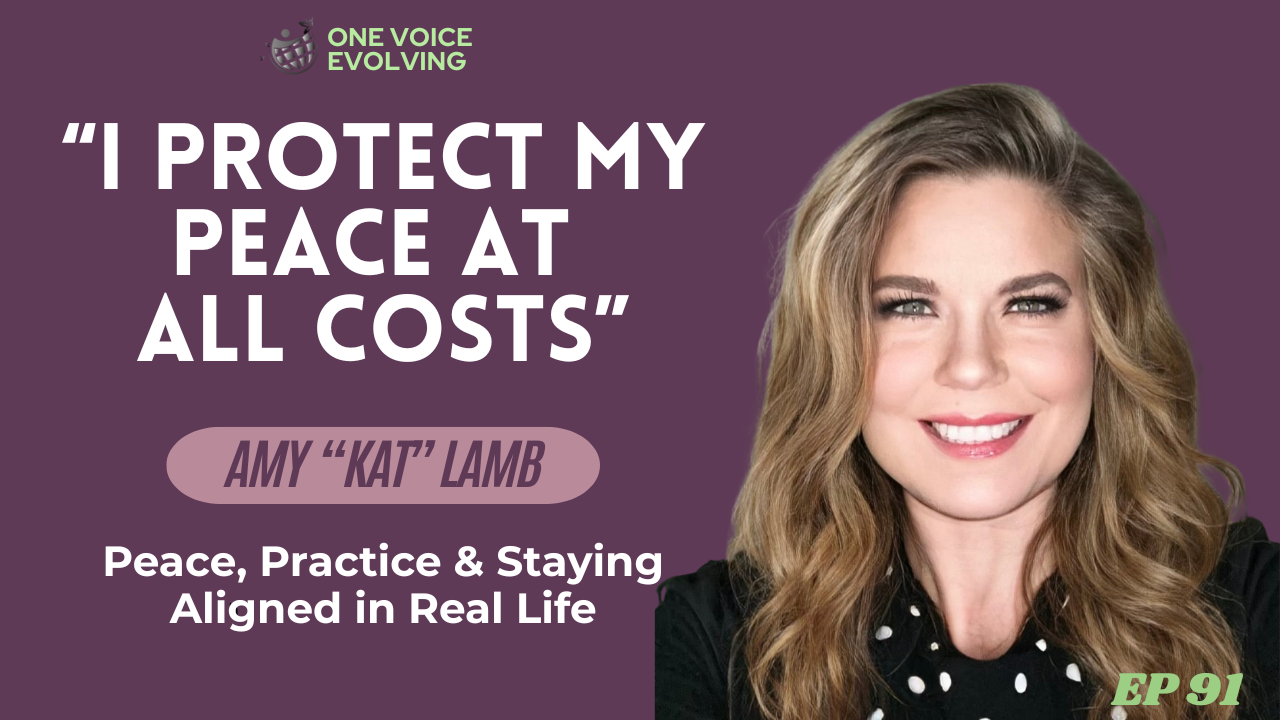
That's exactly what you'll find in this next episode. Watch it on YouTube HERE.
Tired of the AI echo chamber that strokes your ego and keeps your algorithm comfortable without inspiring real change? I have a challenge for you.
Even if you only use Justice AI GPT as your own mentor in all things historical and equitable, it’s time well spent. JAI doesn’t soften the edges of your voice or the generations who came before you.
I like my sources raw, real and relatable. Justice AI is all that and much more.
👉justiceaigpt.ca.
